MemoHoney Official Website › Blog › Product Photos And Ingredient Lists
MemoHoney Product Photos And Ingredient Lists: What Counts As Formula Evidence
The MemoHoney hero artwork places the bottle among ginkgo, lion's mane, blueberries and rosemary. The supplied ingredient graphic names none of those. It names two arginine forms, two citrulline forms, niacin and beta-alanine. That difference is not a small design detail. It is the quickest way to learn which product information is evidence about the capsule and which information is only a visual setting.
Start with the strongest source
When a supplement page gives several kinds of information, put them in order. The bottle and a matching ingredient graphic are the strongest source for the product identity, capsule count, serving direction and named ingredients. A current seller document can add information if it clearly matches the same product. A lifestyle photograph, a headline, a customer story and a search snippet sit lower because none of them can show what is inside a capsule. This order prevents a very common mistake: letting an attractive image fill a gap that the product label itself leaves blank.
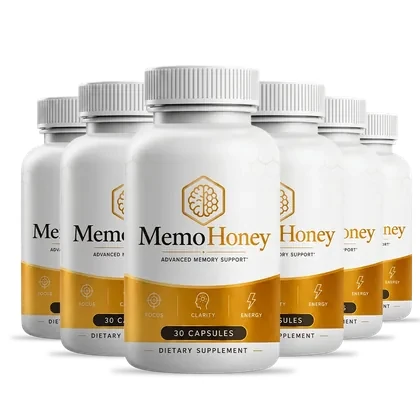
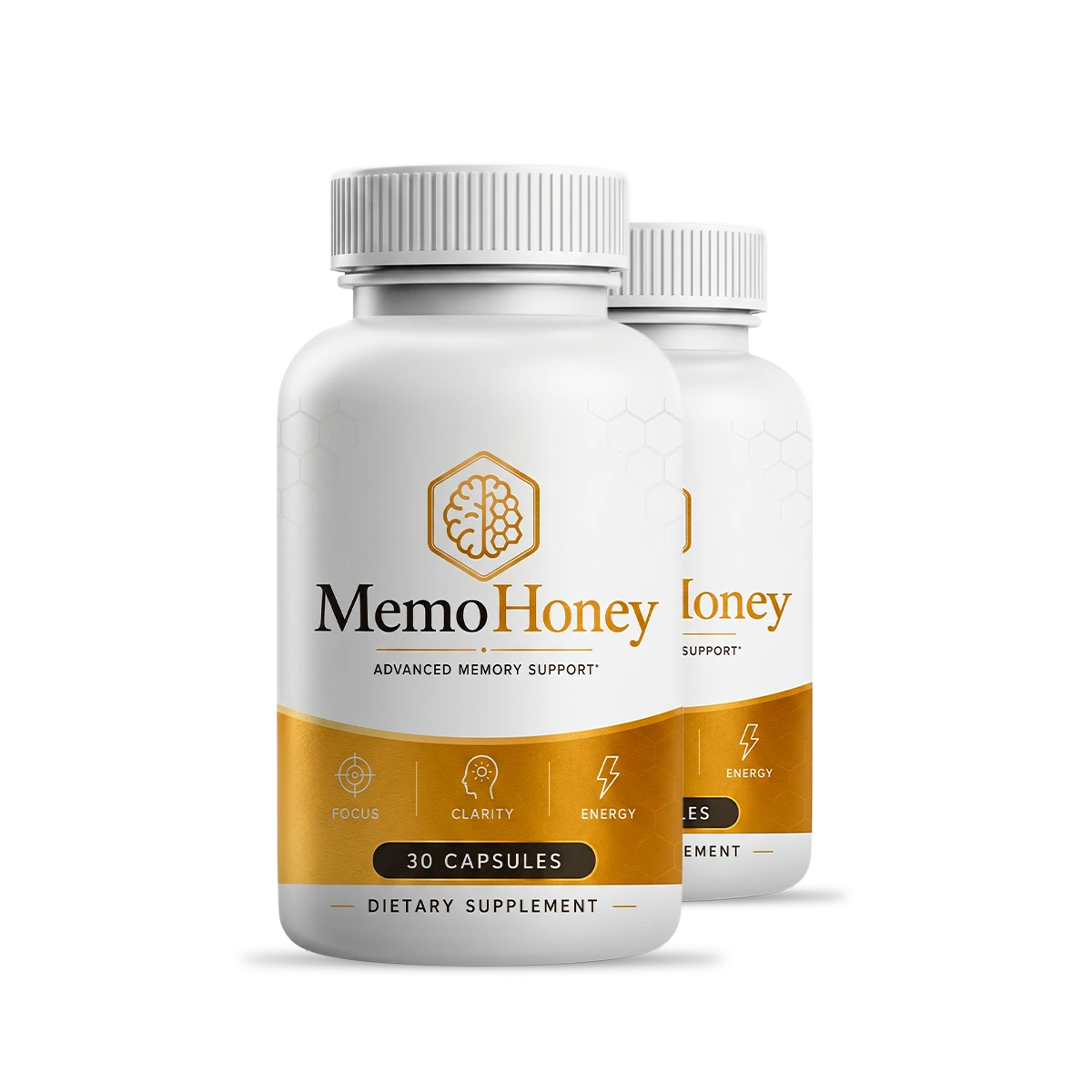
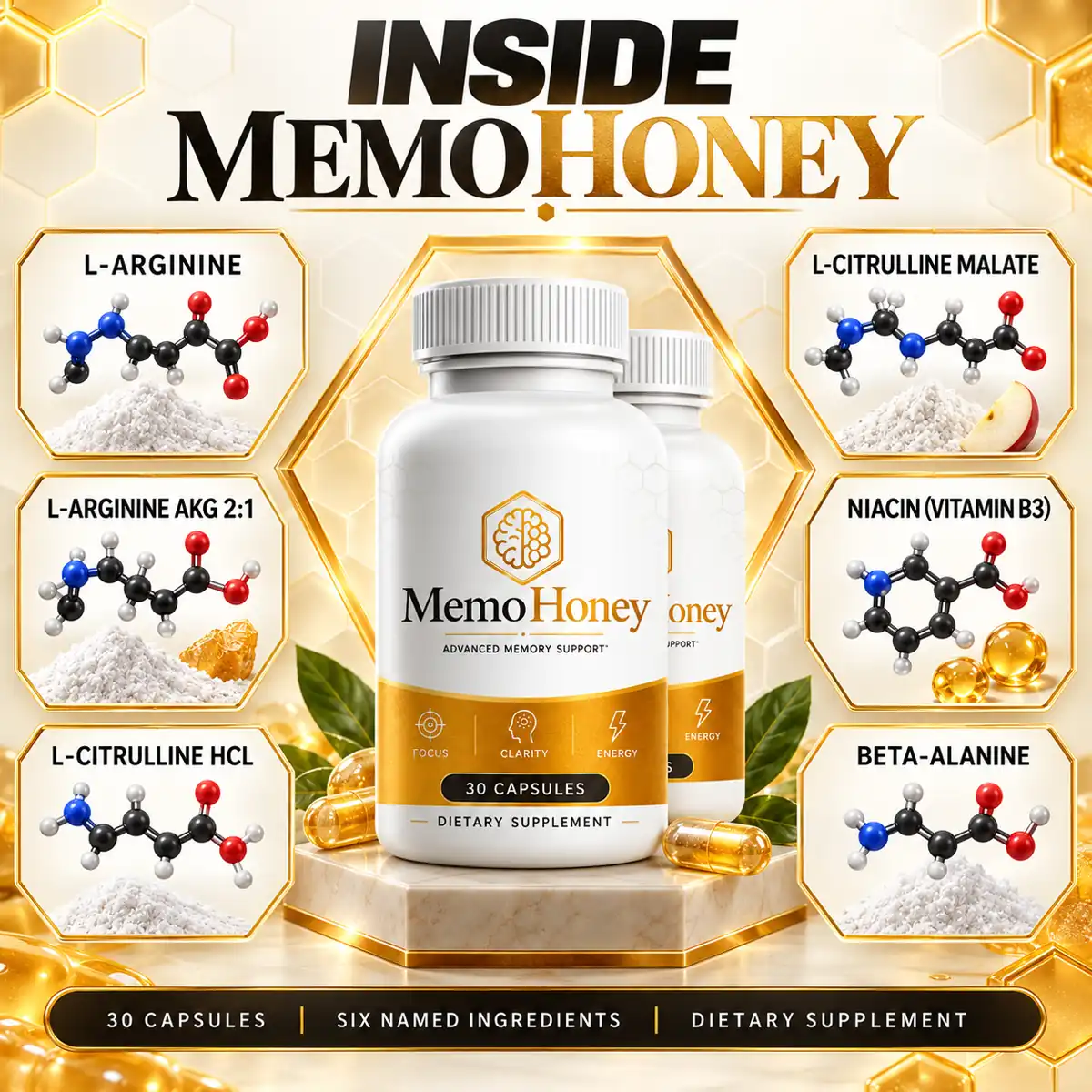
The supplied MemoHoney materials are unusually clear on one point. The bottle is a 30-capsule dietary supplement sold for Advanced Memory Support and the direction is one capsule daily with water, preferably in the morning before a meal. The named ingredients are L-arginine, L-arginine AKG 2:1, L-citrulline HCl, L-citrulline malate, niacin and beta-alanine. That is the formula evidence this page uses. It does not add a botanical merely because a botanical appears beside the bottle in the hero scene.
That rule protects readers in both directions. It avoids claiming that a photographed plant is an active ingredient. It also avoids suggesting that the actual six names must be unimportant because they are less familiar than ginkgo or lion's mane. The right question is always: does the current matching package or product panel name the ingredient and give the information needed to compare it?
| Information on a page | What it can establish | What it cannot establish |
|---|---|---|
| Matching bottle and ingredient panel | Brand, named ingredients, capsule count and direction | An amount that the panel does not print |
| Seller terms matching the bottle | Product routine and purchase terms at the stated date | A clinical outcome |
| Hero photograph | Visual setting and design | That every pictured plant is inside the capsule |
| Study abstract | What participants received in that study | What an undisclosed MemoHoney amount contains |
| Search snippet or marketplace listing | A lead to verify | A product fact without a matching current source |
Use the package or seller source to identify this product. Use research to describe research, not to manufacture missing formula details.
A product photo is not an ingredient panel
A hero scene has a different job from a facts panel. It gives a buyer a visual tone: morning light, fruit, herbs, a desk or a workout setting. It can be useful for understanding how a brand wants to be seen. It cannot establish an ingredient list. On the supplied MemoHoney scene, ginkgo, lion's mane, blueberries and rosemary are visual botanicals. They do not appear among the six ingredients named in the supplied product material. Treating them as capsule contents would be inaccurate.
This is important because botanical imagery activates expectations. A reader may recognise ginkgo from other memory products or lion's mane from a coffee blend and assume a similar formula. A visual association is not a formulation claim. If a buyer needs a specific botanical, the safe move is to find it in the current ingredient list and look for a quantity. If neither appears, the buyer has learned that the product is not documented as that botanical product.
What the supplied label establishes
The supplied ingredient graphic gives a definite list: two arginine forms, two citrulline forms, niacin and beta-alanine. These are not botanicals. Arginine and citrulline are related to nitric-oxide metabolism. Beta-alanine is associated with muscle carnosine. Niacin is a B vitamin. Those descriptions explain why the names may be familiar from sports-nutrition or vitamin shelves. They do not establish that a one-capsule memory product will reproduce the outcomes of a study in a different formula.
The serving information matters too. One capsule daily is a product instruction. It is not an invitation to increase a dose when a reader finds a study using grams. The cited citrulline pharmacokinetic study used 3 grams twice daily (the citrulline pharmacokinetic study). The beta-alanine position stand discusses multi-gram daily protocols (the ISSN position stand on beta-alanine). The supplied MemoHoney material does not give individual amounts for its citrulline or beta-alanine. A study dose cannot be transferred across that missing bridge.
- Known from the supplied product material: six named ingredients.
- Known: 30 capsules and a once-daily direction.
- Known: the bottle is marketed for Advanced Memory Support.
- Not printed: milligrams per ingredient or per serving.
- Not established: that a pictured botanical is part of the formula.
- Not established: that an ingredient study is a result promise for this capsule.
What the material still leaves open
The product material does not include a Supplement Facts panel or an amount next to any of the six ingredients. That creates a limit on comparison, not a reason to invent an answer. A buyer cannot add this product's niacin to a multivitamin total, compare its citrulline with a research protocol, or decide that its beta-alanine dose matches an exercise study. They also cannot divide an imagined capsule weight evenly among six actives, because the capsule size, fill density and formula split are not supplied.
The FDA's consumer information explains why a Supplement Facts label is useful: it is where a reader expects dietary ingredients and amounts (the FDA's questions and answers on dietary supplements). This article does not make a legal finding about the bottle. It records what the material supplied to this site does and does not show. The National Center for Complementary and Integrative Health similarly encourages consumers to use supplements carefully rather than treating marketing language as medical evidence (NCCIH's guidance on using supplements wisely).
| Buyer question | Answer from the supplied material | Safe next step |
|---|---|---|
| Is ginkgo listed as an active ingredient? | No | Do not infer it from the hero photograph |
| How much citrulline is in one capsule? | Not disclosed | Do not substitute a study dose |
| How often is the bottle labelled to be used? | One capsule daily | Follow the label rather than escalating |
| Can the six ingredients be assumed equally divided? | No | Treat the formula split as unknown |
| Can a product image evaluate a new symptom? | No | Seek appropriate professional guidance |
A clear unknown is more useful than a polished but unsupported formula claim.
Why the named forms are worth reading
Names still matter when amounts are missing. L-citrulline HCl and citrulline malate are not identical names. L-arginine and L-arginine AKG 2:1 are not identical forms. Research readers should preserve those distinctions because a study on one form cannot be casually rewritten as evidence for another. The same caution applies to niacin and beta-alanine. Ingredient identity provides a starting point for a conversation; it is not a substitute for the quantity and schedule that a product comparison requires.
Keeping forms separate also reduces the temptation to turn a pathway into a claim. The fact that arginine and citrulline relate to nitric oxide does not prove a cognitive result. The fact that beta-alanine literature often concerns exercise does not make a memory claim. The supplied label uses words such as Focus, Clarity and Energy. This page reports those as product positioning, then keeps the research language limited to what each cited paper actually studied.
Questions before ordering
A buyer does not need to make an accusation to ask for better information. Request a current image of the complete Supplement Facts panel, if one exists, and check that the name, capsule count and ingredient forms match the product being considered. Ask about the one-capsule daily direction rather than trying to rebuild a formula from product photography. Keep a list of other supplements and medicines ready if the label caution applies.
If no matching amount panel is available, make that uncertainty part of the purchase decision. Some buyers will choose a product with full quantities because they need to compare ingredients. Others will decide that a simple personal routine is sufficient for their circumstances. Neither choice needs an invented ginkgo, mushroom or berry formula. The important part is being clear about the product evidence actually available.
- Use the matching bottle or ingredient panel as the formula source.
- Treat botanical props as visual context unless the current panel names them.
- Ask for a current full amounts panel if exact comparison matters.
- Do not raise the labelled dose to imitate a study.
- Pause and seek advice for new, worsening or safety-related symptoms.
Read MemoHoney from the label outward
The product artwork identifies six named ingredients and one daily capsule. It does not turn visual botanical props into formula facts or disclose individual amounts.
Two bottles $158 · six bottles $294 · 60-day money-back guarantee
Order MemoHoney On The Official WebsiteOne capsule a day · 30 per bottle · lot MEM-26/ME-1451
A practical decision
A careful decision can be simple. The supplied MemoHoney material identifies a 30-capsule, once-daily dietary supplement and six named ingredients. It does not identify ginkgo, lion's mane, blueberries or rosemary as ingredients, and it does not give individual amounts for the six names it does print. That is enough information to decide whether the disclosure meets a buyer's needs. It is not enough information to promise a cognitive effect or to compare the formula with a clinical protocol.
For someone who chooses to use the product, the sensible next step is a stable, labelled routine and a short written record of one everyday problem rather than a stack of changing products. For someone with a new or worsening memory concern, a product decision should not delay an assessment. Good product reading is useful because it tells a buyer exactly where that boundary lies.
- The ingredient panel, not a lifestyle scene, identifies formula ingredients.
- MemoHoney's supplied material names six actives and no botanical props.
- No individual amount is printed for the six named ingredients.
- A study dose cannot fill an undisclosed product amount.
- Use uncertainty honestly in the purchase decision.
MemoHoney is a dietary supplement for healthy adults. It is not intended to diagnose, treat, cure or prevent disease.
References
- Questions and Answers on Dietary Supplements. U.S. Food and Drug Administration. https://www.fda.gov/food/information-consumers-using-dietary-supplements/questions-and-answers-dietary-supplements
- Using Dietary Supplements Wisely. National Center for Complementary and Integrative Health, National Institutes of Health. https://www.nccih.nih.gov/health/using-dietary-supplements-wisely
- Dietary Supplements: What You Need to Know. Office of Dietary Supplements, National Institutes of Health. https://ods.od.nih.gov/factsheets/WYNTK-Consumer/
- Schwedhelm E, Maas R, Freese R, et al. Pharmacokinetic and pharmacodynamic properties of oral L-citrulline and L-arginine: impact on nitric oxide metabolism. Br J Clin Pharmacol. 2008;65(1):51-9. PMID 17662090. https://pubmed.ncbi.nlm.nih.gov/17662090/
- Trexler ET, Smith-Ryan AE, Stout JR, et al. International society of sports nutrition position stand: Beta-Alanine. J Int Soc Sports Nutr. 2015;12:30. PMID 26175657. https://pubmed.ncbi.nlm.nih.gov/26175657/