MemoHoney Official Website › Blog › One Capsule, One Routine
One Capsule, One Routine: What A MemoHoney Label Can Answer
“Take one capsule daily” is a clear routine instruction. It is not evidence that the formula carries a study dose, a time-to-effect promise, or a solution for a worsening memory concern. Separating those ideas gives a buyer a calmer and more useful way to decide whether a daily supplement routine belongs in their life.
The direction is a routine, not a research result
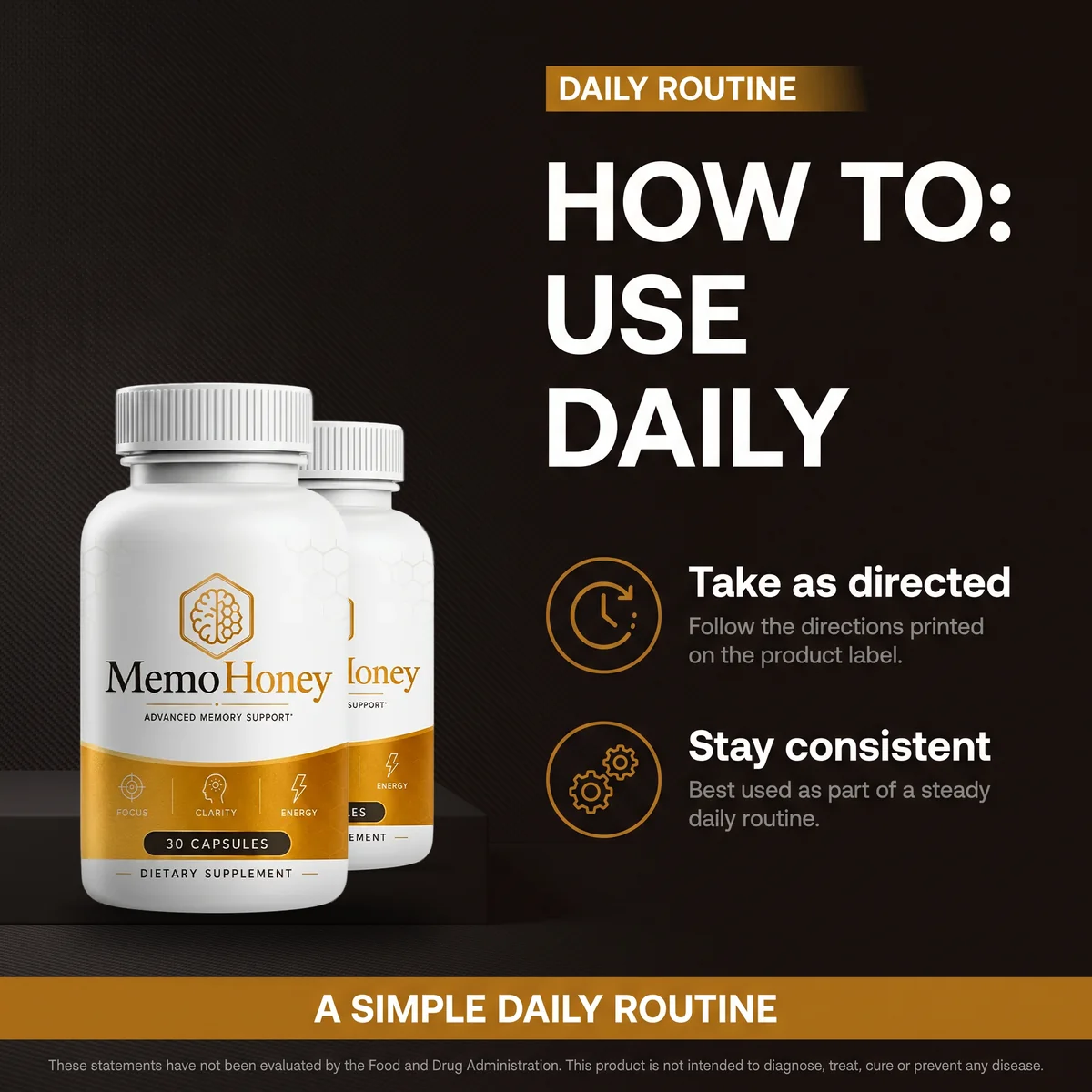
The supplied MemoHoney direction is specific: one capsule daily with a glass of water, preferably in the morning before a meal. That instruction is useful because it tells a buyer how the product is meant to fit a day. It also gives a simple adherence question: was the capsule taken on the days being compared? The instruction does not say that a person should take more after a difficult week, pair it with another stimulant, or use it instead of a medication review or appointment.
A daily instruction can feel more certain than it is. “Daily” describes frequency, not strength. The product materials name two arginine forms, two citrulline forms, niacin and beta-alanine, but provide no milligram amount for any one. The person reading the label knows the route and the names, not the dose of each ingredient. That is why this site preserves the daily instruction while refusing to turn study doses into an adjustment plan.
NCCIH's consumer guidance makes the broader point well: supplements require informed use and should not replace care for a health concern (NCCIH's guidance on using supplements wisely). A routine is most useful when it remains a routine, rather than expanding into a self-treatment plan based on a label headline.
| The label can answer | The label cannot answer | Why the distinction matters |
|---|---|---|
| How often to take this product | How many milligrams of each ingredient are present | Frequency is not formula strength |
| How many capsules are in the bottle | Whether a trial dose is present | Bottle count is not a clinical protocol |
| What ingredients are named | Whether they are equally divided | The formula split is unknown |
| Who should review use carefully | Whether a symptom has a particular cause | A label cannot diagnose |
| That the product is a dietary supplement | That it treats disease | Marketing language is not medical evidence |
A useful product decision begins with the questions a label can answer and stops before the questions it cannot.
What a 30-capsule bottle can organise
Thirty capsules make a 30-day labelled routine if the product is taken once daily. That is a practical calendar, not a research timeline. The supplied seller material does not provide a supported claim that a result appears on day seven, day 14 or day 30. A buyer can still use the calendar well: write down one small everyday problem for five ordinary days before beginning, keep the same question during the routine, and note missed doses or major disruptions.
The record should be modest. It might count how often a work message needs rereading, how often a regular task loses its thread, or whether a planned 25-minute focus block was completed. It should not attempt to score a medical condition, administer a cognitive test, or prove that the capsule caused every change. The point is to replace hindsight with a dated before-and-after view.
Why one capsule does not reveal a dose
It is tempting to take the daily direction, find a study headline, and assume the product follows the same protocol. That reasoning skips the detail that makes research comparable. The cited citrulline pharmacokinetic study used 3 grams twice daily (the citrulline pharmacokinetic study); the arginine blood-pressure work discussed gram-level doses (the 2026 arginine blood pressure meta-analysis). MemoHoney's supplied materials contain no individual amount for either category. A reader cannot responsibly use those papers to calculate a different MemoHoney dose.
The product also contains six names, not one. A capsule has finite space, but the actual fill, density and split are not printed. Dividing an assumed capsule weight by six would be just another invented number. The right conclusion is not that every buyer must reject the product. It is that a buyer who needs dose-specific comparison needs a current matching amount panel rather than a calculation built from guesses.
- Follow the labelled once-daily direction.
- Do not raise the dose to imitate a study protocol.
- Do not assume the six ingredients are equally divided.
- Do not add a second similar supplement to force a faster verdict.
- Keep the product bottle if a pharmacist or clinician needs to review the label.
Use a short written record
A short record should be designed before the first dose. Choose one observable event, write it down for five baseline days, and record it under a stable routine. Add a brief sleep note and factual context if something unusual happens. A deadline, fever, poor sleep, travel, a new energy drink or a missed dose can change a day without establishing anything about the capsule. Keeping such notes visible is a way to respect uncertainty rather than an attempt to explain every inconvenient result away.
Read the notes at day seven and day 14 only to check that the routine is feasible and the same question is being recorded. Use the end of the bottle for the actual decision. If the record is sparse, call it incomplete. If it is flat, call it flat. If a small difference matters to the buyer but the context was stable, it can be a personal reason to continue or not continue. It is never proof that MemoHoney treats a memory condition.
| Record | Reason | Keep it simple |
|---|---|---|
| Chosen everyday problem | Makes the question observable | One count or yes/no each day |
| Dose taken | Shows whether the routine happened | A calendar mark after taking it |
| Sleep and disruption note | Adds context to unusual days | Poor sleep; travel; deadline |
| Other supplement changes | Avoids multiple possible drivers | Product and date |
| New or concerning symptom | Changes the appropriate next step | Pause and seek advice |
The calendar is a personal purchase record, not a clinical assessment.
Keep health and safety questions separate
The bottle caution asks people who take medicine to speak with a doctor before use and not to take more than the label says unless a clinician tells them to. Keep that language intact. A person who is pregnant, nursing, managing a medical condition, or considering the product beside several other supplements needs an individual review, not a general web answer. The NIH consumer guide is a useful starting point for understanding supplements but does not replace that conversation (the NIH Office of Dietary Supplements).
New, worsening or concerning cognitive symptoms move the question out of the product category. Repeated confusion, getting lost in familiar places, unsafe mistakes, or a change noticed by family deserves assessment. The product label cannot identify the cause. A daily routine can be postponed or stopped; a health question should not be postponed because a bottle has thirty capsules left.
Compare choices honestly
When comparing supplements, keep the same decision rule for each candidate. Check the current matching ingredient list, serving direction, quantity, price and seller terms. If the buyer needs exact amounts, ask for a matching panel with quantities. Do not let one product's study citation supply another product's formula. Do not let a photograph supply an ingredient. Do not let a review count substitute for an amount or a clinical endpoint.
Niacin illustrates the reason for this discipline. The MemoHoney material names niacin but does not state an amount. The cited Chicago work was a dietary-intake cohort, not a MemoHoney capsule trial (the Chicago dietary niacin cohort). That observation can guide a reader toward careful wording, not toward a conclusion that a daily capsule will reproduce the cohort's result.
- Match the bottle and ingredient panel to the product being considered.
- Use the serving direction as a routine, not a dose inference.
- Keep other supplements and medicines in the comparison.
- Ask for quantities when quantities determine the choice.
- Do not delay assessment for a worsening concern.

Use MemoHoney as a labelled routine, not a dose puzzle
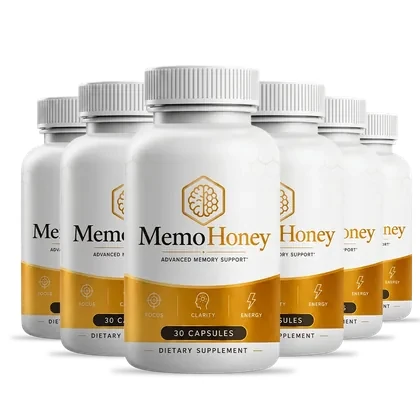
One capsule daily and 30 capsules per bottle are clear product facts. The individual ingredient amounts remain undisclosed in the supplied materials.
Two bottles $158 · six bottles $294 · 60-day money-back guarantee
Order MemoHoney On The Official WebsiteOne capsule a day · 30 per bottle · lot MEM-26/ME-1451
Decide after a complete routine
At the end of a completed routine, a buyer has three honest outcomes: the chosen everyday problem was clearer, it was unchanged, or the record was too mixed to call. The first may support a personal continuation decision. The second may support stopping. The third may mean the routine did not fit or the question was not observable enough. None of the three creates a disease claim, and none changes the need for appropriate assessment when symptoms are concerning.
This approach is deliberately simple because the product evidence is limited to the label and matching source material. It honours what the label gives: a once-daily direction, a 30-capsule bottle and six named ingredients. It also honours what it does not give: individual amounts, a clinical protocol and a promise of a result.
- The daily direction is useful but does not reveal ingredient doses.
- A 30-capsule bottle gives a calendar, not a clinical time-to-effect claim.
- Use one observable question and dated context notes.
- Do not escalate dose or stack products to mimic research.
- A new or worsening symptom belongs with a clinician, not a month-two plan.
MemoHoney is a dietary supplement for healthy adults. It is not intended to diagnose, treat, cure or prevent disease.
References
- Using Dietary Supplements Wisely. National Center for Complementary and Integrative Health, National Institutes of Health. https://www.nccih.nih.gov/health/using-dietary-supplements-wisely
- Dietary Supplements: What You Need to Know. Office of Dietary Supplements, National Institutes of Health. https://ods.od.nih.gov/factsheets/WYNTK-Consumer/
- Schwedhelm E, Maas R, Freese R, et al. Pharmacokinetic and pharmacodynamic properties of oral L-citrulline and L-arginine: impact on nitric oxide metabolism. Br J Clin Pharmacol. 2008;65(1):51-9. PMID 17662090. https://pubmed.ncbi.nlm.nih.gov/17662090/
- Shi Y, Liu Y, Zhou Z, et al. Reassessment of the effect of oral l-arginine on blood pressure: A systematic review and meta-analysis based on ambulatory blood pressure monitoring. Nitric Oxide. 2026;164:60-68. PMID 42520885. https://pubmed.ncbi.nlm.nih.gov/42520885/
- Morris MC, Evans DA, Bienias JL, et al. Dietary niacin and the risk of incident Alzheimer's disease and of cognitive decline. J Neurol Neurosurg Psychiatry. 2004;75(8):1093-9. PMID 15258207. https://pubmed.ncbi.nlm.nih.gov/15258207/