MemoHoney Official Website › Fact-checking policy
Fact-checkingHow MemoHoney Facts Are Checked on This Website
Every MemoHoney fact on this site has to trace back to something you can open.
Label facts come from the artwork, prices from the seller’s page, science from PubMed records with their PMIDs. Dr. Sharon Montes, MD, a physician, reviews each page before it is published, and a fact that turns out wrong is corrected on its page with a new date.
The rules this desk follows before a number, a study or a claim appears on a page, and what happens when one is wrong.
Who writes and who medically reviews the MemoHoney pages
Memohoney-eng is the U.S. retail partner for MemoHoney, working from 3 Times Square in New York with a separate returns address. It sells the product through the seller’s checkout and writes these pages; it does not make the capsule or choose its formula.
The MemoHoney Team writes the pages. Dr. Sharon Montes, MD, the physician the seller’s pack names, gives each one a medical review. Both are named in the strip at the top of the home page, in the checked-page panel at the foot of every page and on the about page.
Four rules every MemoHoney fact has to pass
- It must have an openable source. A label line, a seller page, a PubMed record with its PMID, or a page from a public health agency.
- The source must actually say it. Each citation is read at the record, not copied from another website’s reference list.
- It must be the right scale. When a study used grams and the capsule is a fraction of that, the page says how far apart they are.
- It must stay inside the label. No fact is phrased as a promise the bottle itself does not make.
A sentence that fails any rule is rewritten or removed before the page reaches the medical review.
The sources MemoHoney facts may come from
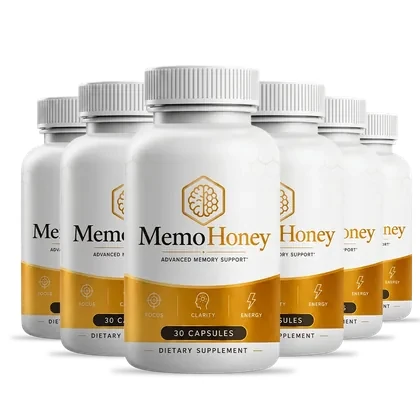
- The label artwork for the six named ingredients, the capsule count, the directions and the claim “Advanced Memory Support” with Focus, Clarity and Energy.
- The seller’s page and checkout for packs, prices, postage and the 60-day refund terms. The checkout was read again on 1 October 2026 and still showed $158 for two bottles, $207 for three and $294 for six.
- Public health agencies: the NIH Office of Dietary Supplements, the National Institute on Aging, MedlinePlus, NCCIH, the CDC, the FDA and the FTC.
- Published research found through PubMed. No study has tested MemoHoney itself, and the pages never suggest one has.
The label material this site was given does not print an amount for any ingredient, so no page states one. Where a dose matters, the page gives the amount the research used and says the capsule’s own figure is not on the supplied artwork.
How MemoHoney dose comparisons are built
Because the supplied label material gives no amounts, a dose comparison on this site runs in one direction only: it reports what a study used and lets you see the scale. Each comparison names the study by its PMID, the form of the ingredient that study gave (L-citrulline or citrulline malate, for example), the daily amount, how long the study ran and what it measured.
Three habits follow from that. A study in athletes is not presented as evidence about memory. A study that measured blood flow or blood pressure is not presented as evidence of a change in thinking. And a result at several grams a day is never carried over to a capsule without saying how small a capsule is by comparison; the blog piece on what one capsule can actually hold works through that arithmetic.
How MemoHoney pages are kept up to date
A page is reopened when something it relies on changes: a new price or pack on the seller’s checkout, a revised label, a new systematic review on one of the six ingredients, or a correction from a reader. The page then goes through the same four rules and the same medical review before the new version replaces the old one.
The revision date in the byline and at the foot of the page is the date of that last change, and the same date is written into the page’s structured data for search engines. A date never moves just to make a page look fresh.
What the MemoHoney medical review checks
After the facts pass the four rules, Dr. Sharon Montes, MD reads the page as a physician. The review looks for wording that could mislead someone about their health: a benefit stated too strongly, a dose comparison that flatters the capsule, a missing warning about blood-pressure medicine, or a symptom that should send a reader to a doctor but does not.
The review has limits. It is not personal advice and does not consider your medicines or history. It does not endorse MemoHoney. And it does not test the capsule; it tests what the page says about it.
Where MemoHoney claims stop on this website
- MemoHoney is never described as treating, preventing or slowing memory loss, dementia or Alzheimer’s disease.
- The seller’s longer claims, such as boosting neural communication, are quoted as the seller’s and not repeated as facts.
- Seals are explained, never presented as approvals; the FDA does not approve supplements before sale (FDA).
- The four to eight weeks quoted for a first effect is what buyers reported, not a promise.
These limits follow the FTC’s health products guidance and the FDA’s page on structure and function claims.
MemoHoney safety notes that must appear where they matter
- Memory loss that is new, worsening or noticed by others: see a doctor (NIA).
- Sudden confusion, speech trouble or one-sided weakness: call 911 (CDC).
- Blood-pressure medicine, nitrates or erectile-dysfunction drugs: ask the prescriber first.
- Niacin from all supplements together: under 35 mg a day for adults (NIH ODS).
The full doctor-first list is in the disclaimer.
How MemoHoney scores, prices and batch codes are presented
Scores. The 4.3 average, 1,183 written reviews, 8,833 orders and 90% recommending were handed to this desk by the distributor. They are reproduced as given and labelled as unaudited.
Prices. Set by the seller and shown with the date they were checked. Struck figures ($358, $537, $1,074) are the seller’s comparison prices.
Batch codes. Lot MEM-26/ME-1451 and certificate reference MEM-1451-26-ME are filing references for the stock this desk holds, not lab results.
The editorial score. This desk’s own marks, each printed with its reason, and labelled as opinion.
How Memohoney-eng earns from MemoHoney
This desk is paid a commission on orders placed through the order buttons, which are marked as sponsored links and open the seller’s checkout. The price you pay is the checkout price. No card details are ever entered on this website.
The phone number and inboxes in the footer are for tracking, changes and refunds after you have ordered, not for placing an order.
How a wrong MemoHoney fact gets corrected
Send the page address and the line in question to the editorial inbox shown in the footer. For a citation, include the PMID; for a label question, a photograph of your bottle. The desk checks the claim against the source, corrects the page where the error appears and moves its revision date.
September 30, 2026. Bylines and the foot of every page now name the medical reviewer; a doctor-first section was added to the disclaimer; phone and email details moved to the footer and the contact page; the distributor’s score left the top of the home page; the phone menu was fixed so every link can be reached; and this policy was published.
MemoHoney fact-checking questions
Is the medical reviewer paid to recommend MemoHoney?
The review is not a recommendation. Dr. Sharon Montes, MD checks pages for accuracy and safety wording; nothing in that review endorses the product or predicts a result.
What makes a fact count as checked on this site?
It traces to a source a reader can open: the label artwork, the seller’s page, a PubMed record or a public health agency. If it does not, it is not printed.
Why do the MemoHoney pages show trial doses instead of capsule amounts?
The label material this site was given names the six ingredients without amounts. Printing the trial doses beside each name shows the scale the research worked at without inventing a figure.
Can I trust the star scores shown on this site?
Read them as the distributor’s own figures. The 4.3 average from 1,183 written reviews was supplied to this desk and has not been audited.
How do I tell this desk a fact is wrong?
Use the editorial inbox shown in the footer and include the page address and the line. A confirmed error is fixed on the page and the revision date moves.
Does the commission influence the fact-checking?
The method is published so you can judge that. Weak doses, unproven links and doctor-first warnings are printed beside the order buttons all the same.
Sources for the MemoHoney fact-checking policy
- National Center for Complementary and Integrative Health page, Using Dietary Supplements Wisely. https://www.nccih.nih.gov/health/using-dietary-supplements-wisely
- Food and Drug Administration page, Questions and Answers on Dietary Supplements. https://www.fda.gov/food/information-consumers-using-dietary-supplements/questions-and-answers-dietary-supplements
- Food and Drug Administration page, Structure/Function Claims. https://www.fda.gov/food/nutrition-food-labeling-and-critical-foods/structurefunction-claims
- Federal Trade Commission page, Health Products Compliance Guidance. https://www.ftc.gov/business-guidance/resources/health-products-compliance-guidance
- National Institute on Aging page, Memory Problems, Forgetfulness, and Aging. https://www.nia.nih.gov/health/memory-loss-and-forgetfulness/memory-problems-forgetfulness-and-aging
- MedlinePlus page, Alzheimer’s Disease. https://medlineplus.gov/alzheimersdisease.html